



Resources
Browse training resources for Fertilizer Canada’s ongoing safety initiatives and world–class training programs.
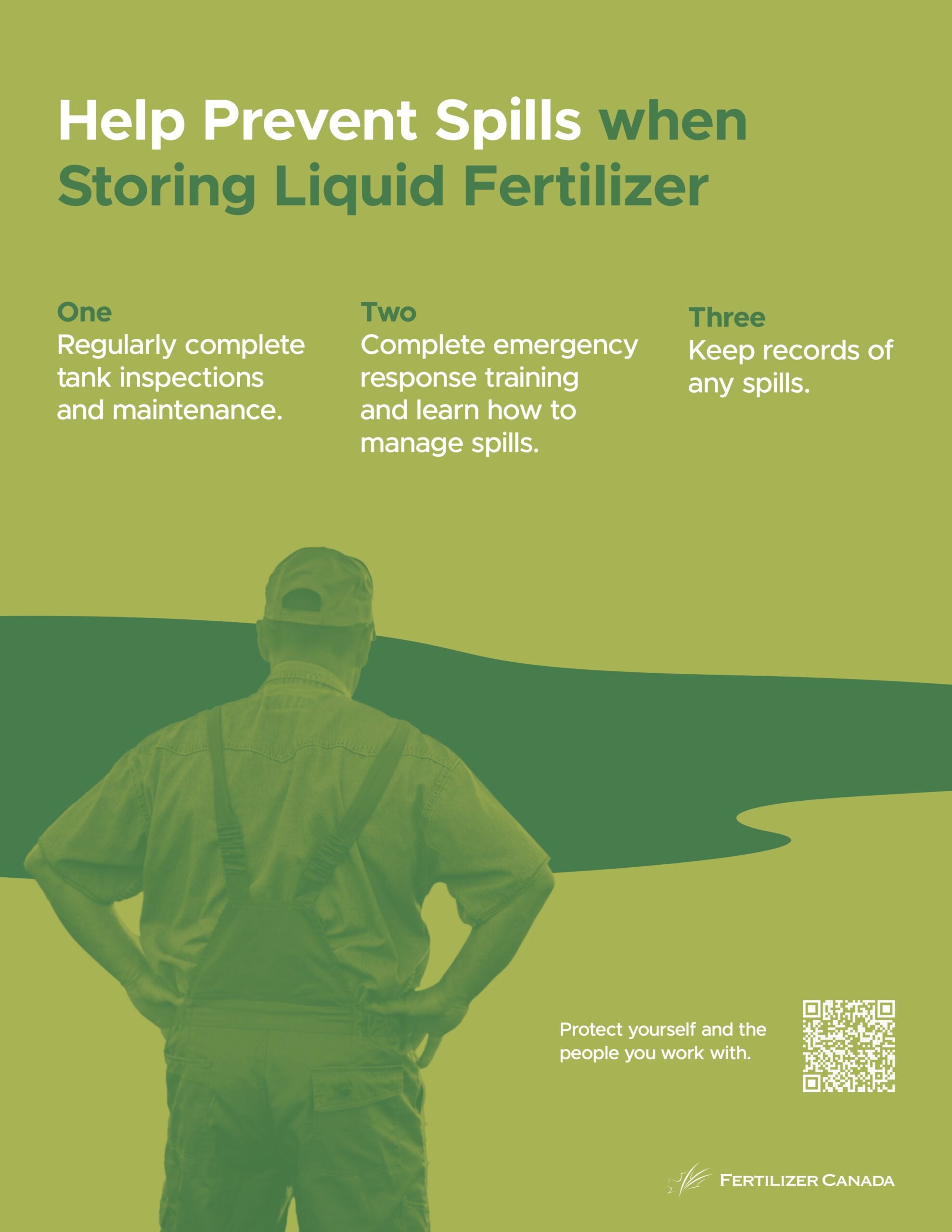
Liquid Storage Guidance
The Canadian fertilizer industry is committed to improving safety and minimizing the environmental impact of its products. Although incidents involving accidental release of liquid fertilizer are rare, historical incidences of storage tank and containment failures have resulted in significant liability costs to the property owner, fertilizer supplier, and industry for emergency response, environmental assessment and remediation, environmental regulatory fines, as well as negative impacts to the industry’s public perception.
As an industry association that works to advance the safe, secure, and sustainable use of commercial grade fertilizer, Fertilizer Canada’s safety stewardship programming is paramount. The Liquid Fertilizer Storage Guidance document is part of Fertilizer Canada’s best-in-class safety stewardship program, Fertilize S.A.F.E. The program works to educate, enable, and empower those in the fertilizer supply chain through the use of industry enforced codes of practice, educational resources, and training tools. Fertilize S.A.F.E. helps define safety and security for all industry players.
Adoption of consistent best management practices for liquid fertilizer storage at facilities across Canada will help raise the bar on safety for Canada’s fertilizer industry by:
- reducing associated risks with accidental release of liquid fertilizer from storage tanks by mitigating the associated environmental risk, economic liability, and safety risk; and
- reducing regulatory risk by demonstrating proactivity by the industry and therefore maintaining license to operate.
The Liquid Fertilizer Storage Guidance document covers best management practices for bulk liquid fertilizer (including UAN 28-0-0/32-0-0, ATS 15-0-0- 20, APP 10-34-0, and other liquid NPK blends) stored in tanks at agri-retail/distribution facilities and on-farm in Canada. The guidelines cover tank characteristics, storage.
Bin Storage Guidance
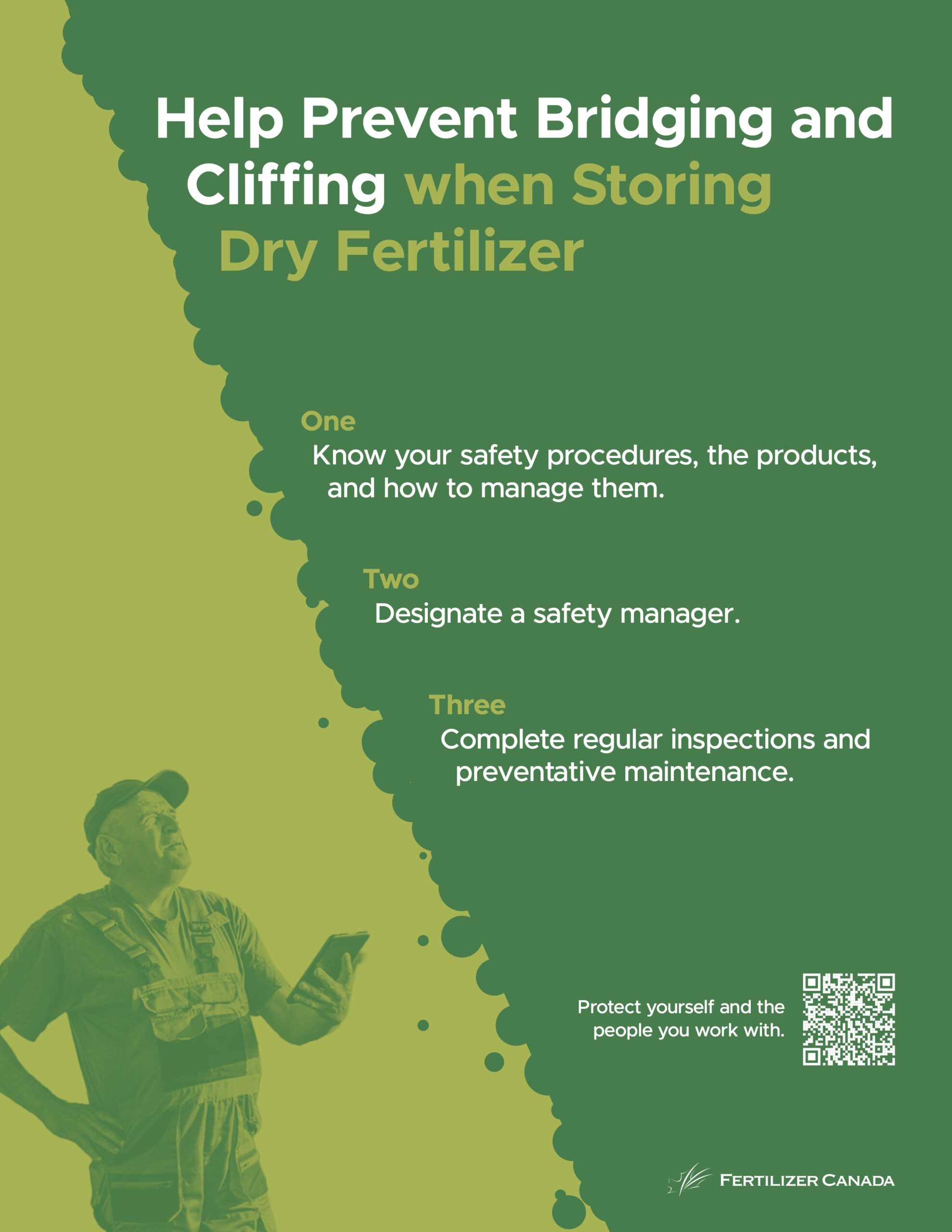
This guidance was developed through the efforts of Fertilizer Canada and our members, including manufacturers, distributors, and retailers of fertilizers. We recognize the need for consistent industry-wide guidance and best management practices for dry fertilizer bin storage to mitigate safety concerns related to storing dry fertilizer products. The Bin Storage Guidance document is intended to provide guidance for facilities that store dry fertilizer products in flat-bottom bins or in hopper-bottom bins. Specifically, this document covers best practices for preventing and managing cliffing in dry fertilizer storage bins.
Following consistent voluntary industry best management practices will help raise the bar on safety for Canada’s fertilizer industry. The goal is to establish a common set of best management practices for dry fertilizer storage, that, upon adoption at the retail and farm level, will decrease the associated risks with cliffing and cliff management of dry fertilizer.
As an industry association that works to advance the safe, secure, and sustainable use of commercial grade fertilizer, Fertilizer Canada’s safety stewardship programming is paramount. The Dry Fertilizer Bin Storage Guidance & Best Management Practices document is part of Fertilizer Canada’s best-in-class safety stewardship program, Fertilize S.A.F.E. The program works to educate, enable, and empower those in the fertilizer supply chain through the use of industry enforced codes of practice, educational resources, and training tools. Fertilize S.A.F.E. helps define safety and security for all industry players.
Bulk Carrier Training
The Bulk Carrier program provides specialized training for safe handling and transporting of anhydrous ammonia, and meeting the requirements outlined in the Canadian Transportation of Dangerous Goods (TDG) Regulations. The Bulk Carrier Training Manual provides a standardized set of processes used in the industry, in aspects such as loading, transporting, and ensuring that vessels, personnel, and equipment are within regulatory standards and industry best practices. The Bulk Carrier Training Manual helps industry workers understand specified requirements and procedures such as:
- Understanding product characteristics
- Transport requirements and regulations
- Anhydrous ammonia vessel signage requirements
- Truck/trailer transport requirements
- Understanding security and safety requirements
- Personal protective equipment
- Inspections and loading procedures
- First response for emergencies
- Incident reporting
On Guard – Ammonium Nitrate Safety & Security Information
On Guard informs users of ammonium nitrate about safe and secure on-farm use, and agri-retailers’ role in maintaining a secure and controlled storage facility.
As a farmer who handles ammonium nitrate should:
- Understand the security measures required to prevent the theft and tampering of ammonium nitrate
- Report any incidents (including attempted theft) and report them immediately
- Understand that unauthorized reselling of ammonium nitrate is strictly prohibited
- Know your agri-retailer’s role in ensuring safe and secure storage of ammonium nitrate
- Know that your agri-retailer has the responsibility to ensure the right amount of product is going into the right hands
Please report any suspicious activity to the RCMP National Security Information Network at 1-800-420-5805.
Share this information today!

On Guard Personal Brochure
The On Guard program is intended to inform end-users of ammonium nitrate about safe and secure on-farm use and the agri-retailer’s role in maintaining a secure and controlled storage facility.
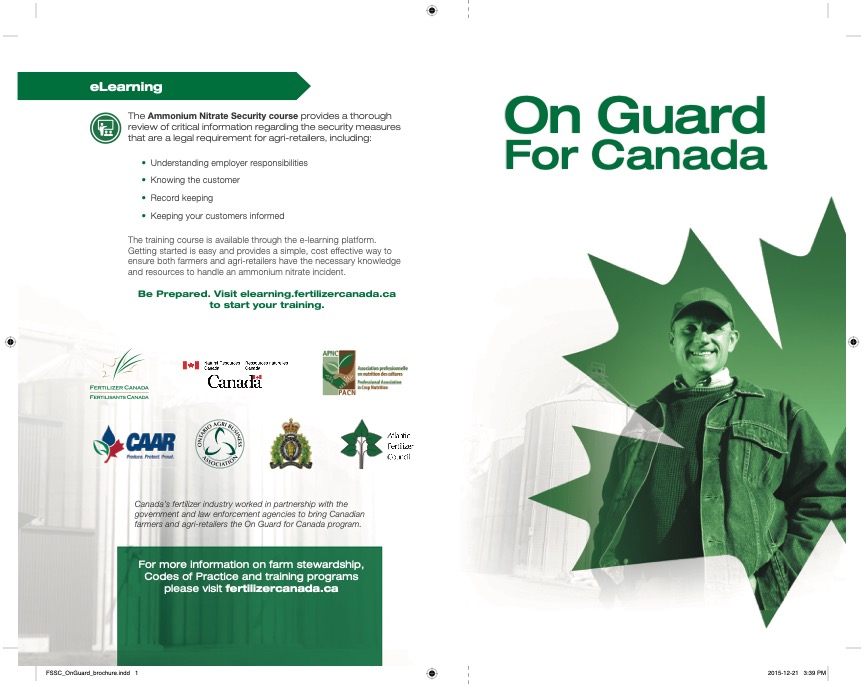
On Guard Brochure for Distribution
The On Guard program is intended to inform end-users of ammonium nitrate about safe and secure on-farm use and the agri-retailer’s role in maintaining a secure and controlled storage facility.